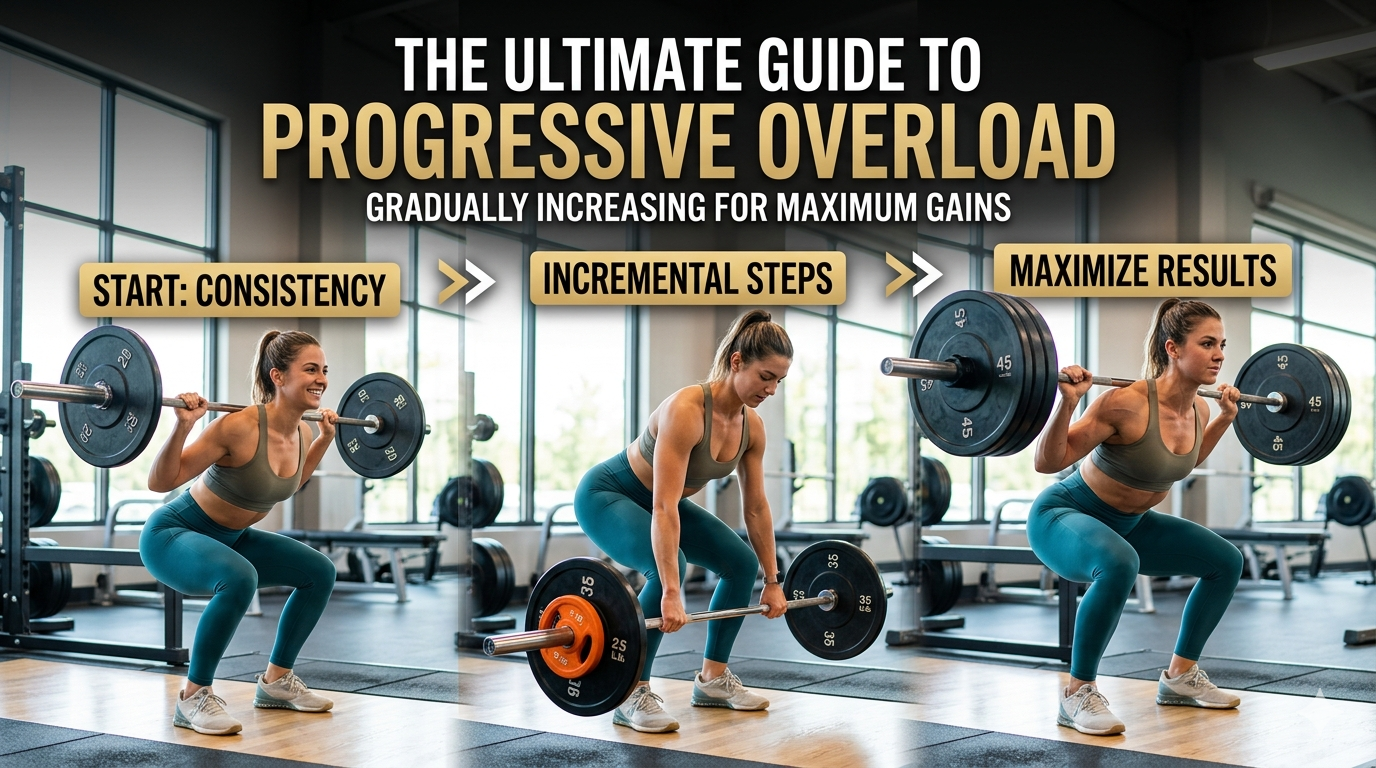
When it comes to building strength, muscle, and endurance, one principle stands above all others: progressive overload. It’s the foundation of every effective training program, whether you’re lifting weights in the gym, doing bodyweight exercises at home, or training for a sport. Without progressive overload, your body has no reason to adapt—and without adaptation, you won’t see results.
This guide will break down what progressive overload is, why it matters, and how you can apply it step‑by‑step to maximize your training.
🔑 What Is Progressive Overload?
Progressive overload is the gradual increase of stress placed on the body during exercise. In simple terms, it means challenging your muscles a little more over time so they continue to grow stronger and more resilient.
Your body adapts to the demands you place on it. If you lift the same weight for the same reps every week, your muscles will stop growing because they’ve already adapted. Progressive overload ensures you keep pushing the boundaries.
⚡ Why Progressive Overload Matters
-
Muscle Growth (Hypertrophy): Muscles grow when they’re forced to handle more tension than before.
-
Strength Gains: Increasing load or intensity trains your nervous system to recruit more muscle fibers.
-
Endurance Improvements: Gradually increasing volume or reducing rest builds stamina.
-
Avoiding Plateaus: Without overload, progress stalls. With it, you keep moving forward.
Think of progressive overload as the fuel that drives your fitness journey.
📈 Methods of Progressive Overload
There are several ways to apply progressive overload. You don’t always need to add more weight—there are multiple levers you can pull:
-
Increase Weight (Load): The most straightforward method. Example: moving from 50 kg to 55 kg on the bench press.
-
Increase Reps: Doing more repetitions with the same weight. Example: 3 sets of 8 reps becomes 3 sets of 10 reps.
-
Increase Sets: Adding more total work. Example: 3 sets becomes 4 sets.
-
Improve Technique: Performing the same exercise with stricter form or slower tempo.
-
Reduce Rest Time: Shorter breaks increase intensity and endurance.
-
Increase Range of Motion: Example: moving from half squats to full squats.
-
Add Frequency: Training a muscle group more often per week.
🛠️ Step‑by‑Step Guide to Applying Progressive Overload
1. Establish a Baseline
Start by tracking your current performance. Write down the weights, reps, sets, and rest times you can handle with good form. This is your starting point.
2. Choose Your Overload Method
Pick one or two methods at a time. For beginners, increasing reps or weight is usually the most effective. Advanced lifters may benefit from manipulating tempo, rest, or frequency.
3. Progress Gradually
Don’t jump from 50 kg to 70 kg overnight. Aim for small, consistent increases:
-
Weight: 2–5% increase per week.
-
Reps: Add 1–2 reps per set.
-
Rest: Reduce by 10–15 seconds.
4. Track Everything
Keep a workout log. Tracking ensures you know exactly how much you’re improving and prevents guesswork.
5. Listen to Your Body
Progressive overload should challenge you, not injure you. If form breaks down or pain occurs, scale back.
6. Deload When Needed
Every few weeks, reduce intensity or volume to allow recovery. This prevents burnout and keeps progress sustainable.
🧠 Example Programs
Beginner (3 Days/Week)
-
Squat: 3×8 (add 1 rep each week until 12, then increase weight)
-
Bench Press: 3×8 (same progression)
-
Deadlift: 3×5 (increase weight gradually)
-
Pull‑Ups: 3×AMRAP (as many reps as possible, aim to add 1 rep weekly)
Intermediate (4 Days/Week Split)
-
Day 1: Upper Body Strength
-
Day 2: Lower Body Strength
-
Day 3: Rest
-
Day 4: Upper Hypertrophy
-
Day 5: Lower Hypertrophy
Here, overload can be applied by increasing load on strength days and increasing reps/sets on hypertrophy days.
⚠️ Common Mistakes to Avoid
-
Too Much Too Soon: Rapid increases lead to injury.
-
Ignoring Recovery: Muscles grow during rest, not during training.
-
Poor Form: Adding weight without proper technique is counterproductive.
-
Neglecting Nutrition: Progressive overload requires fuel—protein, carbs, and healthy fats.
-
Not Tracking: Without data, you can’t measure progress.
🧩 Progressive Overload Beyond Weights
Progressive overload isn’t limited to lifting. It applies to:
-
Running: Increase distance, speed, or reduce rest between intervals.
-
Cycling: Add resistance or extend ride time.
-
Bodyweight Training: Move from knee push‑ups to full push‑ups, then to decline push‑ups.
🏆 The Long‑Term Perspective
Progressive overload is not about quick wins—it’s about consistent, incremental progress. Think of it as climbing a staircase: each step is small, but over time you reach new heights.
The key is patience. A 2 kg increase per week may not sound like much, but over a year, that’s more than 100 kg of progress. Small steps compound into massive results.
✅ Key Takeaways
-
Progressive overload is the foundation of strength and muscle growth.
-
You can overload by increasing weight, reps, sets, frequency, or intensity.
-
Track your workouts and progress gradually to avoid injury.
-
Apply overload to all forms of training, not just weightlifting.
-
Consistency and patience are the ultimate drivers of success.
✍️ Final Thoughts
Progressive overload is simple in theory but powerful in practice. It’s the difference between spinning your wheels and making real progress. Whether your goal is to build muscle, get stronger, or improve endurance, this principle ensures you’re always moving forward.
Remember: don’t chase perfection—chase progress. Each workout is an opportunity to push just a little harder than before. Over time, those small improvements add up to extraordinary results.